
NFL Weather Adjustments for Player Prop Betting
 Available in US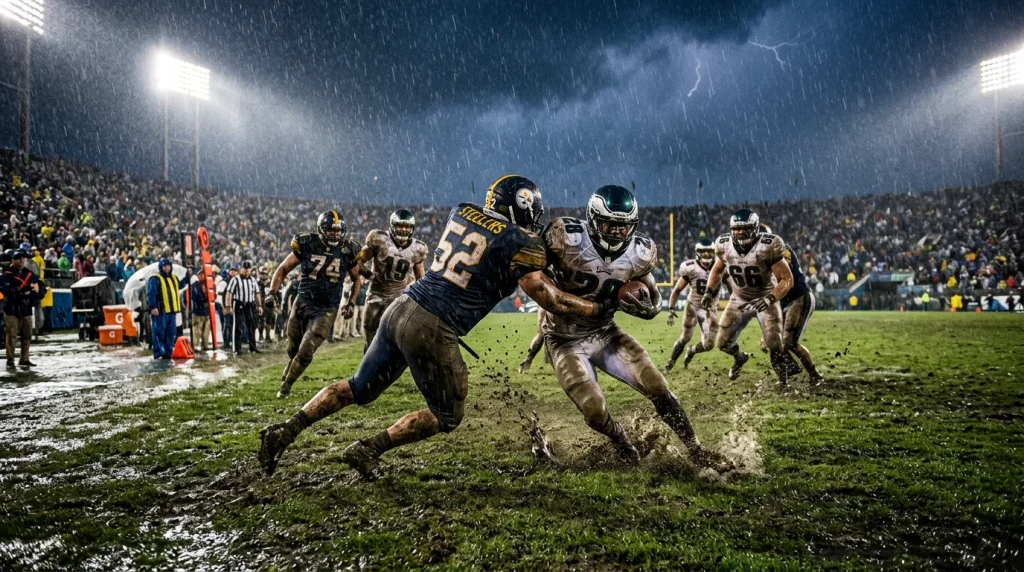
December 2023. A game in Chicago with sustained winds clocking 28 mph. I had taken a quarterback’s passing yards over at 248.5, a line that looked generous based on the matchup. He finished with 162 yards. The wind did not just affect the passing game — it obliterated it. Both teams abandoned the deep ball entirely, short passes turned into wobbling ducks, and the game devolved into a rushing contest. I should have known better. The weather data was there, available hours before kickoff, and I ignored it because the matchup analysis was too seductive. That game cured me of ever overlooking weather again.
Weather is the most underrated variable in NFL player prop analysis. It does not matter every week — roughly half the league plays in domes or retractable-roof stadiums — but when it matters, it matters enormously. And because most punters do not adjust for it, the book’s weather-influenced lines often sit closer to fair value than the non-weather lines, creating a curious inversion: the games where weather is a factor are often the games where the edge is clearest, because the public is not paying attention.
High winds will drastically lower quarterback efficiency, which is a key factor to consider before engaging in NFL passing yards betting.
Wind Thresholds – Identifying Under Value in Passing Props
Not all wind is created equal, and knowing the thresholds that actually affect gameplay separates useful weather analysis from noise.
Below 10 mph, wind has negligible impact on passing. Quarterbacks adjust naturally, the ball flight is barely affected, and you can ignore the forecast entirely. Between 10 and 15 mph, the effect is detectable but minor — a slight reduction in deep-ball accuracy, perhaps a yard or two off the passing average. Most bookmakers do not adjust their lines meaningfully in this range, and nor should you.
The threshold I care about is 15 mph sustained. Above this level, the passing game changes structurally. Deep passes — throws travelling 20-plus yards in the air — become unreliable. The ball moves laterally in flight, receivers cannot track it consistently, and quarterbacks who depend on the deep ball see their yards per attempt compress. Data across multiple seasons shows that passing yards per game drop by roughly 12-15% in games with sustained winds above 15 mph compared to calm conditions. That is a 30-40 yard swing on a quarterback lined at 260 yards — more than enough to shift the over/under calculus.
At 20 mph and above, the effect is dramatic. Play-calling shifts toward screens, slants, and designed runs. Punts become adventures. Field goals beyond 40 yards become coin flips. NFL viewership averaged 18.6 million per game in 2025, but the viewing audience does not always notice the wind the way a prop bettor should — the broadcast cameras smooth out the conditions, and commentators rarely quantify the wind speed until a punt goes sideways. Your weather check before kickoff is information the casual viewer does not have.
Wind direction adds a layer of nuance. A crosswind affects accuracy more than a headwind of the same speed. A tailwind can actually help the passing game slightly by adding velocity to throws, though the effect is modest. I note both speed and direction in my pre-game check and adjust my confidence in passing overs accordingly. The threshold remains 15 mph sustained, but a 17 mph crosswind is worse for passing than a 17 mph tailwind.
Rain, Snow and Extreme Cold: Effects on Rushing and Receiving Lines
Rain is the weather condition most bettors remember to check and least effectively analyse. Light rain has almost no impact on NFL play. The balls are dried between plays, gloves provide grip, and modern field surfaces drain quickly. I have watched games in steady drizzle where the passing stats were indistinguishable from dry conditions.
Heavy rain — sustained downpour with puddling on the field — is different. Ball security deteriorates, fumble rates tick upward, and offensive coordinators tighten their play sheets. The passing game does not collapse the way it does in heavy wind, but completion rates dip and yards after catch decline because receivers lose traction on wet surfaces. Running backs are affected too, though the conventional wisdom that “rain favours the run” is more nuanced than it sounds. Rain suppresses overall offensive efficiency, which means fewer plays and fewer yards for everyone. The running game might get a larger share of a smaller pie, but the absolute rushing yardage does not necessarily increase.
Snow produces the most visually dramatic games but the statistical impact depends on accumulation. A dusting of snow on a well-maintained field is closer to dry conditions than most people assume. Six inches of snow on the ground transforms the game entirely — footing disappears, speed advantages vanish, and the contest becomes a battle of power and scheme simplicity. Snow games are rare enough that most UK punters will encounter one or two per season, but when they happen, the prop implications are massive: rushing yards overs for power backs, passing yards unders for everyone.
Extreme cold — below minus 5 Celsius — affects grip, ball feel, and player conditioning. Quarterbacks wearing gloves throw with less touch. Receivers who normally catch with bare hands may glove up, reducing feel on contested catches. The overall effect on props is a slight reduction in passing efficiency, similar in magnitude to moderate wind but through a different mechanism. I treat extreme cold as a half-step down from the 15 mph wind threshold: notable, worth a small adjustment, but not game-changing unless combined with wind or precipitation.
Always check the latest forecast and line movements on the top platform for NFL prop bets before kickoff.
Dome Games Versus Outdoor Stadiums: Adjusting Your Approach
Here is the simplest edge in NFL weather analysis: stop checking the weather for dome games. It sounds obvious, but I see punters waste time every week researching conditions for games played under a roof. Domes eliminate weather entirely. Temperature is controlled, there is no wind, no rain, no snow. The only variable is altitude in one specific stadium, and even that effect is debatable.
What dome games do provide is a controlled environment that favours the passing game. No weather variability means no suppression of deep passing. Prop bets across leading leagues have grown at more than 60% year on year, and dome games are where passing overs hit at the highest rate because the environment never works against the quarterback. If your analysis says the passing yards over is the right side based on matchup and game script, a dome game removes the one external factor that could derail it.
The strategic implication is straightforward. In a week where multiple games offer similar matchup edges, I prioritise the dome game for my passing prop bet and look for weather-influenced outdoor games for my rushing or under bets. The dome gives me a clean read on the passing matchup; the outdoor game gives me an environmental edge that most punters underweight.
Retractable-roof stadiums add a wrinkle. Some retractable roofs close in inclement weather, turning the game into a de facto dome. Others stay open in mild rain or cool temperatures. Check whether the roof is open or closed before kickoff — this information is usually available on the stadium’s official channels or through NFL beat reporters on social media. A game you modelled as an outdoor contest might become a dome environment an hour before kickoff, invalidating your weather-based thesis. I have been caught by this twice, and now I monitor roof status as part of my final pre-bet checklist. For a broader framework on structuring that checklist, my prop strategy guide walks through the full pre-bet process.
Where can UK bettors check NFL game-day weather forecasts?
Several free weather services provide hourly forecasts for specific US cities and stadium locations. Search for the stadium"s city and check the hourly forecast around the expected kickoff time. NFL beat reporters for each team also regularly tweet weather updates from the stadium in the hours before the game, which can be more specific about conditions on the field than general city forecasts.
Do indoor stadium props tend to have higher lines than outdoor?
Passing yards lines in dome games are generally set higher than equivalent outdoor matchups because the controlled environment removes weather-related suppression of the passing game. Rushing lines in dome games are not systematically different from outdoor games. The key factor is not the stadium type itself but the absence of wind, rain, and cold that can reduce passing efficiency in outdoor venues.
Articles
Published by the NFL Player Betting team.
