
Exploiting NFL Rookie Player Props and Soft Lines
 Available in US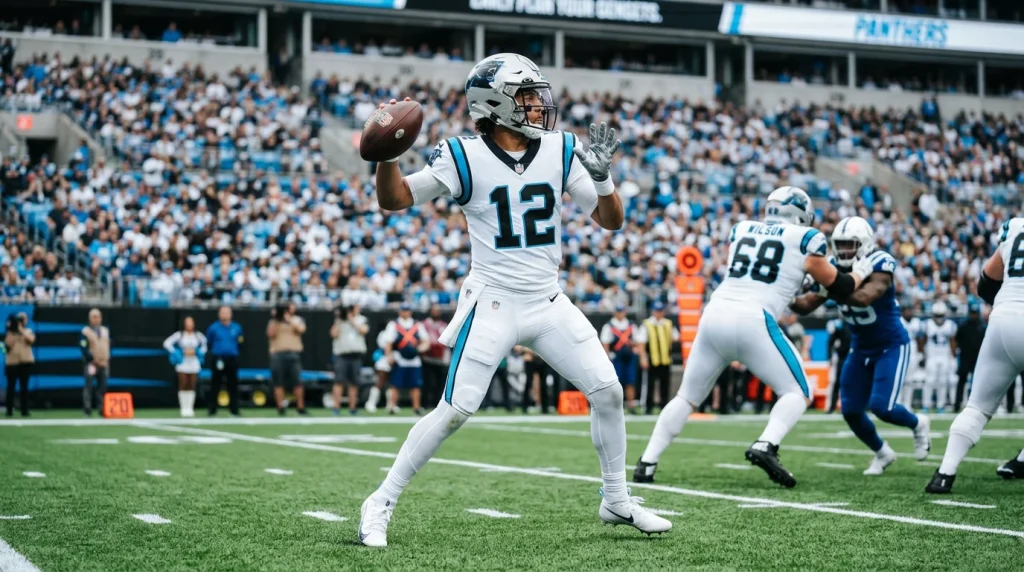
Week 4 of the 2024 season. A rookie wide receiver nobody outside his own fanbase had heard of was listed with a receiving yards line of 32.5. He had played limited snaps in Weeks 1-3, caught a handful of passes, and looked like the kind of late-round pick who might be on the practice squad by November. Then the team’s second receiver went down with a hamstring injury during warmups. The rookie stepped into an expanded role, ran routes on 85% of pass plays, and finished with 7 catches for 94 yards. The bookmaker had priced him on what he had been, not what he was about to become. That gap — between a rookie’s recent past and his immediate future — is where the prop market mispricings live.
Rookie props are a fascinating corner of the NFL market because first-year players carry inherently unstable statistical profiles. Their roles change week to week. Coaches promote them, demote them, and shuffle their responsibilities based on small samples of performance. The bookmaker sets lines using whatever limited data exists, and that data is often an unreliable guide to the next game. For UK punters comfortable with volatility, this instability is not a bug — it is the entire source of the edge.
Market Inefficiency – Exposing Soft Rookie Prop Lines
I have been comparing line accuracy across player experience levels for three seasons now, and the pattern is unmistakable. Prop lines on players in their first NFL season deviate from actual outcomes by a wider margin than lines on veterans. The average absolute error on a veteran quarterback’s passing yards line — the gap between the line and the actual result — runs around 30-35 yards. For a rookie quarterback, that figure stretches to 45-55 yards. The same pattern holds, proportionally, for rookie receivers and running backs.
The reason is simple: less data means worse models. A veteran quarterback has 50 or 100 career games of data feeding the bookmaker’s projection. A rookie in Week 5 has four games, and at least one of those might have been a limited appearance off the bench. The bookmaker does the best he can with the information available, but four data points cannot produce the same confidence interval as a hundred. The line is a rougher estimate, and rougher estimates create wider edges for bettors who bring additional context — college production, snap count trends, coaching scheme tendencies — that the raw NFL numbers cannot yet capture.
The prop market has expanded at over 60% year on year across UK platforms, and that expansion has pushed bookmakers to offer lines on more players, including rookies who would not have had props listed five years ago. The broader coverage is good for punters because it creates more opportunities, but the rapid expansion means the lines on marginal players — including many rookies — are set with less analytical rigour than the lines on established stars.
The Role Expansion Trigger That Most Punters Miss
The single most profitable pattern in rookie props is what I call the role expansion trigger: the moment when a first-year player’s snap count or target share jumps meaningfully from one week to the next, signalling a promotion within the offence or defence.
Snap count data is released publicly after every game. A rookie wide receiver who played 35% of offensive snaps in Weeks 1-3 and then played 70% in Week 4 has been promoted. His prop line for Week 5, if the bookmaker anchors heavily to the four-week average, will underweight the Week 4 leap. The line might be set using a blended projection that still reflects his early limited role, while the actual expectation should be closer to a starter’s workload.
I check snap count and target share changes every Wednesday morning when the previous week’s data becomes available. Any rookie whose snap count increased by 15 percentage points or more from the prior week goes on my watchlist. If that increase came with a corresponding jump in targets or carries, the player’s prop line for the upcoming week is almost certainly too low — the market adjusts, but it adjusts slowly, often taking two or three weeks to fully reflect a role change that happened immediately.
The reverse is equally useful. A rookie whose snaps dropped sharply — perhaps because he made too many mistakes or because a veteran returned from injury — is overpriced if his line still reflects his higher-usage period. Fading rookies after a snap count drop is the mirror image of backing them after a jump, and the market is equally slow to adjust in both directions.
Rookie Quarterbacks and the Line Movement Pattern
Rookie quarterbacks generate the most dramatic line movements in the NFL prop market because the public forms strong opinions about them quickly. A rookie who throws for 300 yards in his first start becomes a media sensation overnight. His passing line for the following week jumps aggressively — sometimes 20-30 yards above where a sober assessment would place it — because the public floods the over side expecting a repeat performance.
The data tells a different story. First-year quarterbacks show a strong regression-to-the-mean pattern after standout performances. The 300-yard debut is often the product of a favourable matchup, a specific game plan designed to protect the rookie with short passes, and an element of surprise that disappears once defences have film to study. The second start is harder. Defences adjust, the game plan gets less creative, and the quarterback faces situations the coaching staff could not prepare him for. Average viewership across NFL games hit 18.6 million in the 2025 season, and that audience creates enormous hype around rookie quarterback debuts — hype that inflates the prop line beyond what the performance data supports.
My approach to rookie quarterback props after a strong debut is straightforward: take the under. The line has moved to price in a repeat that the data says is unlikely. The regression is not a certainty — some rookies genuinely sustain their debut production — but the market overprices continuation so consistently that the under carries a structural edge in the week following a standout first start.
College Production as a Supplementary Data Source
When the NFL data is thin, college production fills the gap. This is not about blindly projecting college stats onto the professional game — a receiver who averaged 120 yards per game in college will not replicate that against NFL defensive backs. It is about identifying the type of player you are dealing with and the role he is most likely to fill.
A college receiver who thrived on short-to-intermediate routes and posted a high catch rate is likely to fill a possession role in the NFL — consistent targets, reliable receptions, modest yards per catch. His prop line should be evaluated against that profile. A college receiver who was a deep-ball specialist with a lower catch rate but a high average depth of target brings more volatility — he will either hit a long reception that smashes the over or he will catch nothing and finish well short. Knowing which profile you are betting on changes how you size your stake and whether you include the player in a single bet or a multi-bet combination.
Draft capital matters too, not because high draft picks are inherently better prop bets, but because coaches invest more playing time in high-round selections. A first-round pick is going to get opportunities even after a bad game because the organisation has committed significant capital to developing him. A sixth-round pick who has a bad game might lose his snaps to a veteran. The staying power of high draft picks creates a floor under their involvement that late-round rookies do not enjoy.
Mid-Season Rookie Props: When the Sample Gets Useful
The first four weeks of a rookie’s career produce unreliable data. The role is still being defined, the coaching staff is experimenting, and the player is adjusting to the speed and complexity of the NFL. By Week 8, the picture clarifies. A rookie receiver who has been playing 75% of snaps and commanding 20% of targets for four straight weeks has an established role. His prop line, built on a more stable foundation of data, is priced more accurately — but not perfectly.
The mid-season opportunity shifts from role-expansion triggers to matchup exploitation. By Week 8, you know what the rookie is: his route tree, his target depth, his red zone involvement. The question becomes whether his line for a specific game accounts for the matchup. A rookie slot receiver averaging 55 receiving yards per game who faces a defence ranked bottom five against the slot position has a concrete edge, because his line is set near his 55-yard average while the matchup projects him closer to 70.
UK punters have access to 13.5 million active gambling accounts across regulated platforms, and the NFL prop market is competing for engagement within that pool. Rookie props offer something the mature veteran markets do not — genuine pricing inefficiency driven by data scarcity — and that inefficiency persists deeper into the season than most bettors assume. Even by Week 12, a rookie’s body of work is still small enough that a single outlier game can skew his season average and misprice the following week’s line.
Tracking Rookie of the Year Candidates and Their Prop Trajectories
The Rookie of the Year race creates a secondary dynamic in the prop market. Players who emerge as ROTY contenders receive increased media attention, which drives public betting action toward their overs. The market responds by shading their lines upward — not because the player’s underlying performance justifies the adjustment, but because the public demand for over bets on a popular name needs to be balanced.
This is the same dynamic that inflates Monday Night Football star props on a smaller scale. A rookie generating ROTY buzz has his line set 5-10% above where neutral modelling would place it, because the bookmaker needs the inflated number to balance the lopsided public action. For the disciplined bettor, this creates a repeating under opportunity on the season’s most hyped rookies — the players everyone is talking about, the ones getting the most media coverage, and therefore the ones whose lines are most distorted by public enthusiasm.
The less-hyped rookies in the same draft class, meanwhile, fly completely under the radar. Their lines are set closer to fair value or slightly soft because nobody is betting them with the same emotional investment. These players — the mid-round picks who quietly carve out a role, the undrafted free agents who earn snaps through training camp — are where the genuine value lives. The market’s attention is finite, and attention concentrates on the biggest names, leaving the edges untouched on the names that do not generate headlines.
When is the best time to bet on NFL rookie player props?
The most profitable window for rookie props is in the first six weeks of the season, when the bookmaker has the least data and lines are softest. Watch for role expansion triggers — sudden increases in snap count or target share — that signal a promotion the line has not yet priced in. By mid-season, the data improves and lines tighten, shifting the edge from data-scarcity plays to matchup-based angles.
Should I use college stats when evaluating a rookie"s prop line?
College stats are useful as a profiling tool rather than a direct projection. They help you understand whether a player is a possession receiver, a deep-ball specialist, or a volume rusher, which informs how to evaluate the volatility of his NFL prop. Do not project college yardage totals onto NFL games, but do use the profile to assess which type of performance distribution the player is likely to produce.
Articles
Published by the NFL Player Betting team.
