
NFL Defensive Player Props and IDP Market Analytics
 Available in US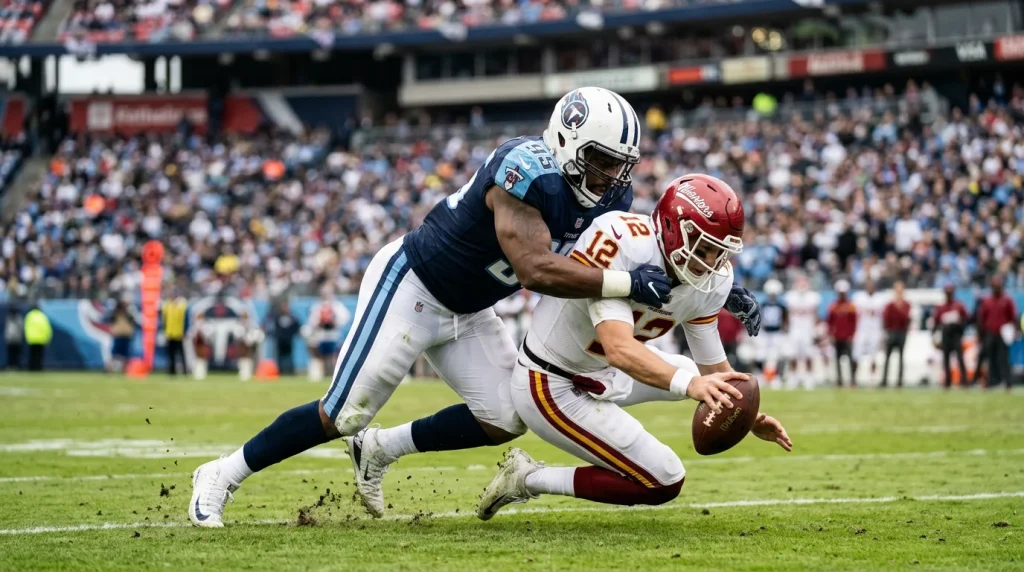
I avoided defensive props for years. The variance felt too wild — a pass rusher might record two sacks one week and none the next three. An interception felt like betting on lightning striking a specific tree. Then a friend who had been grinding defensive props quietly for two seasons showed me his spreadsheet. His return on tackle overs for inside linebackers was nearly double his return on any offensive prop category. That spreadsheet changed my mind about the entire defensive market.
Defensive props are the newest and least efficient corner of the NFL prop universe. Bookmakers have been pricing passing and rushing props for decades, refining their models with each season. Defensive props — sacks, interceptions, tackles, passes defended — are newer to the mainstream market, and the pricing reflects that immaturity. The lines are softer, the margins are wider, and the informed bettor has a genuine structural edge that will shrink as the market matures but exists now in abundance.
Tackle Markets – Uncovering Value in Defensive Props
Tackles are the most predictable defensive statistic, which is exactly why tackle overs have been my best-performing prop category over the past two seasons.
Inside linebackers — the players who line up in the middle of the defence — are tackle machines. Their job on virtually every play is to read the offence, diagnose the play, and get to the ball carrier or nearby. A starting inside linebacker on a competent defence records 7-10 tackles per game with remarkable consistency. The variance is low because the opportunity is high: every running play and most short passes generate a tackle opportunity for the middle linebacker, and the volume of those plays across a full game smooths out the randomness.
Bookmakers set tackle lines based on the player’s season average, which is reasonable. But the adjustment for game-specific factors — particularly the opposing offence’s tendencies — is where the lines get soft. An inside linebacker facing a run-heavy offence sees 5-8 more tackle opportunities per game than one facing a pass-heavy spread offence. If the line does not fully reflect that matchup, the over is the play.
I track each offence’s rushing attempt rate and short-pass rate (completions within 5 yards of the line of scrimmage) because both generate tackles for inside linebackers. When those rates are above league average, the starting inside linebacker’s tackle prop leans over. With 13.5 million active gambling accounts across the UK, the defensive prop market is still underpenetrated enough that this kind of straightforward analysis produces an edge the market has not eliminated.
Sack Props: Understanding Pressure Rate Versus Sack Conversion
A teammate once asked me why I bet on sack unders more often than overs. My answer: sacks are the most volatile defensive statistic in football. A pass rusher can generate consistent pressure every week — beating his blocker, forcing the quarterback out of the pocket — and still record zero sacks because the quarterback threw the ball a half-second before being hit. Pressure creates sack opportunities. It does not guarantee sacks.
The distinction between pressure rate and sack conversion rate is critical for prop betting. A pass rusher with a high pressure rate but a low sack conversion rate is generating opportunities that are not translating into the statistical outcome the prop measures. His sack prop, set using his season average of sacks per game, reflects the conversions he has gotten rather than the pressure he has generated. If his conversion rate is above the league average, regression is likely — meaning fewer sacks going forward. If his conversion rate is below average, positive regression may push his sack numbers higher.
The matchup angle for sacks centres on the opposing offensive line. An offensive line that allows a high pressure rate is an inviting target for pass rushers, but only if that pressure translates into sacks. Some offensive lines allow pressure because their tackles are beaten off the edge but the quarterback has a quick release that minimises sack exposure. Other lines allow pressure that leads directly to sacks because the quarterback holds the ball and the interior protection collapses.
I check the opposing quarterback’s time to throw alongside the offensive line’s pressure rate. A quarterback who averages 2.8 seconds to throw is going to take more sacks against pressure than one who averages 2.3 seconds. The quick-release quarterback turns pressure into incompletions rather than sacks, which is a meaningful distinction for anyone betting the sack prop.
Interception Props: Betting on the Least Predictable Outcome
Interceptions are the least predictable stat in football. Even the best ball hawks in the NFL — the safeties and cornerbacks who lead the league in picks — average only 4-6 interceptions per season, which works out to roughly one every three games. Betting on a specific player to record an interception in a specific game is, in the most charitable framing, a low-probability proposition with high variance.
That said, the market occasionally misprices interception props in ways that create value. The key variable is the opposing quarterback’s interception rate — how often he throws picks as a percentage of his total attempts. A quarterback with a 3.5% interception rate throws roughly one pick per game. Facing a defence with multiple playmakers in the secondary, those interception opportunities are distributed across the defensive backs. The player most likely to intercept the pass is the one who covers the route the quarterback most frequently targets when throwing into danger — typically the intermediate zones over the middle of the field.
I treat interception props as lottery tickets rather than core bets. They belong in same-game parlays where their long odds boost the overall payout, not as standalone wagers where the variance dominates the outcome. When I do bet an interception prop, it is because the opposing quarterback’s interception rate is significantly above average and the defensive back in question plays in the coverage zone where that quarterback makes his most dangerous throws.
Defensive Game Script: Tackles Rise When the Offence Struggles
Defensive props are sensitive to game script in the opposite direction from offensive props. When a team’s offence struggles and falls behind, its defence spends more time on the field facing more plays. More plays mean more tackle opportunities for every defender. An inside linebacker whose team trails by two scores in the fourth quarter might face 10-15 more offensive snaps than his baseline, and each snap is a tackle opportunity.
This creates a directional signal: tackle overs for defenders on teams that are expected to lose. The underdog’s defence will face more plays, generate more tackle opportunities, and produce higher individual tackle numbers. The reverse is also true — defenders on heavy favourites may see fewer snaps if their offence controls the game and keeps the opposing offence on the sideline.
Sack props react to game script differently. When a team leads, the opposing offence becomes more pass-heavy, which increases sack opportunities for the leading team’s pass rushers. A defence that is ahead by 10 points faces an offence throwing on 65-70% of plays, compared to the baseline 55-60%. Those extra pass attempts are extra chances for the defensive line to get home. Pass rushers on teams favoured by a touchdown or more are the strongest sack over candidates.
Combining Defensive Props With Offensive Reads
The smartest use of defensive props is not in isolation but as a complement to your offensive prop analysis. When you identify a game where the offence is going to struggle — low total, poor matchup, bad weather — the corollary is that the defence is going to be active. Tackle overs, sack overs, and passes-defended overs on the opposing defence all benefit from the same conditions that create unders on the offensive side.
This complementary approach lets you bet the same game thesis from multiple angles. A game you have modelled as a low-scoring defensive battle supports passing unders on both quarterbacks, rushing overs on the favoured running back, and tackle overs on both teams’ inside linebackers. Each bet reinforces the same read, diversifying your exposure across different prop types while maintaining a coherent analytical framework. The 62% in-play betting share across the UK market shows that punters want to engage deeply with individual games, and defensive props provide an additional layer of engagement that most bettors have not yet explored.
Why are tackle props more predictable than sack or interception props?
Tackles are generated by high-frequency events — every running play and most short passes create a tackle opportunity for inside linebackers. The volume of opportunities per game smooths out variance and produces consistent stat lines. Sacks depend on pressure converting into a hit before the quarterback releases the ball, and interceptions are low-frequency events averaging roughly one every three games even for elite defensive backs.
How does game script affect defensive player props?
When a team trails, its defence faces more offensive snaps, increasing tackle opportunities for all defenders. When a team leads, the opposing offence becomes more pass-heavy, increasing sack opportunities for the leading team"s pass rushers. Tackle overs favour defenders on underdog teams, while sack overs favour pass rushers on heavily favoured teams.
Articles
Written by the editors at NFL Player Betting.
