
Top UK Bookmakers for NFL Player Prop Markets
 Available in US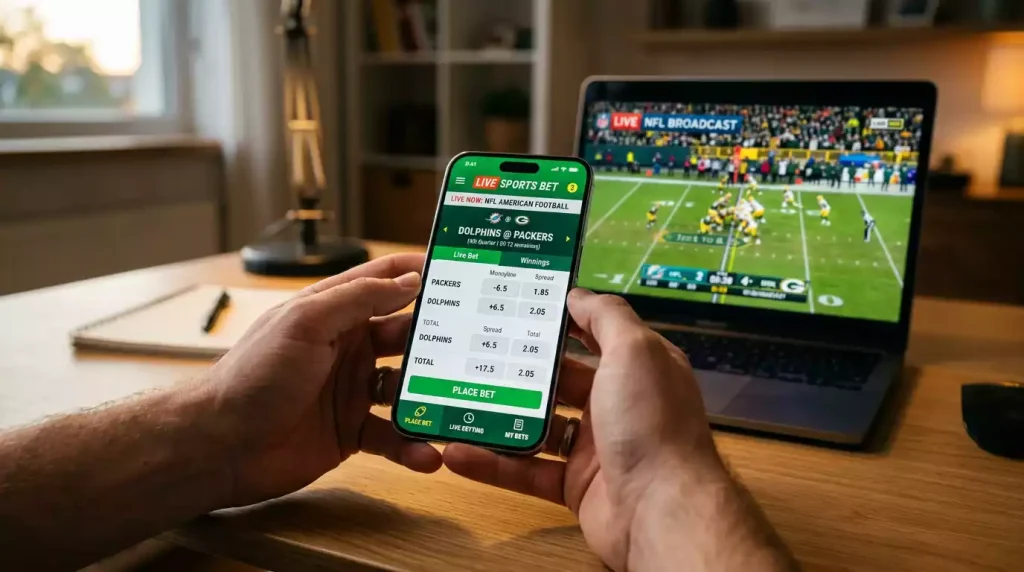
Every September, I get the same message from at least a dozen people: “Which bookmaker should I use for NFL props?” My answer has never been a name. It is a framework. The best platform for you depends on how you bet, what markets you need and how much friction you are willing to tolerate in exchange for a better price or a deeper prop menu.
The UK online betting market processes 13.5 million active accounts each month and generates billions in gross gaming yield, yet the vast majority of that activity is concentrated on Premier League football. NFL occupies a smaller corner, and that means not every bookmaker treats American football with the same seriousness. Some offer a skeleton menu of moneylines and spreads, tack on a handful of player props for the Sunday night game and call it a day. Others go deep — hundreds of prop lines per match, defensive markets, combo props, live in-play adjustments. The gap between these two experiences is the difference between working with a full toolkit and trying to build a house with a hammer and a prayer.
This guide gives you the criteria to evaluate any UK bookmaker for NFL player prop betting. I am not going to tell you which one is “best” — that word means nothing without context. Instead, I will walk you through six factors that separate a useful NFL platform from a mediocre one, explain why prop market depth matters more than welcome bonuses, and show you how to stress-test a bookmaker’s odds accuracy before you commit your bankroll.
To fully utilize these bookmakers, you need to understand the mechanics detailed in our comprehensive guide, where NFL player props are explained for UK bettors.
Selection Criteria – The Six Core Factors for NFL Bookmakers
I once signed up to a bookmaker purely because they were offering a £30 free bet for new accounts. Their NFL prop menu had exactly four markets per game: passing yards, rushing yards, receiving yards and anytime touchdown scorer. That was it. I used the free bet in week one and never logged in again. The lesson cost me nothing financially but saved me a season’s worth of frustration: a welcome offer is the least important factor in choosing where to bet on NFL player props.
Here are the six factors I weigh, in rough order of importance.
First, prop market depth. How many individual player markets does the bookmaker list per NFL game? Five is bare minimum and barely usable. Twenty to thirty covers the main skill positions. Fifty or more, including defensive props and combo markets, is where serious prop bettors want to be. I check this during the first week of the regular season by comparing the same game across three or four platforms. The differences are immediately obvious.
Second, UKGC licensing. This is non-negotiable and I will dedicate an entire section to it below. Britain’s unlicensed gambling market has ballooned to £16.6 billion — triple what it was in 2019. The legal market’s share has dropped from 97% to 92% in that same period. Betting with an unlicensed operator exposes you to zero regulatory protection, no dispute resolution and no guaranteed payout. Andrew Rhodes, the Chief Executive of the UK Gambling Commission, has spoken publicly about strengthening regulation and improving consumer protections, and those protections only apply if your bookmaker holds a valid licence.
Third, odds competitiveness. Two bookmakers can offer the same prop — say, a quarterback’s passing yards over 261.5 — at different prices. One might have it at 1.87, the other at 1.93. Over hundreds of bets, that 0.06 difference in decimal odds compounds into a significant portion of your profit or loss. I compare at least three platforms before placing any prop bet worth more than a few pounds.
Fourth, mobile experience. NFL games kick off during UK evenings and late nights. Most prop bettors I know are placing bets from their phones while watching on a second screen. An app that is slow to load prop markets, buries NFL three menus deep or crashes during live betting is actively costing you money through missed opportunities and frustration-driven bad decisions.
Fifth, cash-out availability. Not every bookmaker offers cash-out on NFL player props, and among those that do, the terms vary wildly. Full cash-out, partial cash-out and auto cash-out at a trigger price are all different features. If you plan to trade positions during a game — especially with live props — cash-out functionality moves from “nice to have” to essential.
Sixth, bet builder and same game parlay functionality. If you want to combine multiple player props from the same match into a single bet, you need a platform with a robust NFL bet builder. Not all bet builders are equal: some limit the number of legs, some restrict which prop types can be combined, and some price correlated legs more aggressively than others.
Prop Market Depth: Why Not Every Bookmaker Is Equal for Player Bets
Prop market depth is not just about quantity — it is about coverage of the right positions and the right stat categories. A bookmaker that lists forty markets per game but only covers quarterbacks and running backs is less useful than one that lists thirty markets but includes tight end targets, defensive sacks and kicker field goal attempts.
Across major leagues, bookmakers now routinely publish five or more prop lines per starting player in a given match. The NFL is at the front of that trend because its statistical infrastructure is deep and publicly available. Every throw, carry and tackle is logged in real time, giving oddsmakers the data they need to price individual performance markets with confidence. But not every UK platform invests the same effort into pricing NFL-specific props.
When I audit a bookmaker’s NFL offering, I start with a Thursday night game — a single match with no competing fixtures to split attention. I open the player props tab and look for three tiers. Tier one: passing yards, rushing yards, receiving yards, anytime touchdown scorer. Every bookmaker with an NFL page covers this. Tier two: completions, passing touchdowns, interceptions thrown, receptions, targets, longest reception. A solid platform will have most of these. Tier three: defensive sacks, interceptions by a specific defender, combined tackles, kicker points, quarterback rushing yards, combo props. If a bookmaker covers tier three, they are serious about American football.
The depth also matters during the season. Some platforms expand their NFL menu for marquee fixtures — Monday Night Football, Thanksgiving games, the playoffs — but offer a skeleton service for a Week 7 early window match between two mid-table teams. Consistency across the full schedule tells you the bookmaker has a dedicated American football trading team rather than a generic algorithm that scales with perceived demand.
Do not assume market depth is fixed. Bookmakers add and remove markets based on handle volume, trader availability and competitive pressure. If NFL props attract enough UK interest this season, you will see platforms that currently offer twenty markets per game pushing toward fifty by the playoffs. The trajectory is clear, and your job is to identify which bookmakers are already ahead of the curve.
Odds Competitiveness and Margin Comparison Across UK Books
A mate once told me he had been betting NFL props for two years without ever comparing odds across bookmakers. He was effectively paying a premium on every single bet without realising it. The moment he started checking three platforms before placing each wager, his results improved — not because his analysis got better, but because he was consistently getting a slightly better price.
Margin comparison is straightforward once you know the mechanic. Take any two-way prop — say, passing yards over/under 265.5. If one bookmaker prices it at 1.87/1.95 and another at 1.91/1.91, you can calculate the overround for each. The first has a combined implied probability of 104.8%, the second 104.7%. The difference is tiny on that single bet, but it compounds. Over 500 bets in a season, consistently choosing the tighter-margin price is worth several percentage points of return on investment.
UK bookmakers vary in how aggressively they margin NFL props compared to Premier League football. NFL markets attract less UK volume, which means less competitive pressure on pricing. Some platforms apply a wider margin to American football by default because they know most punters are not comparing. Others keep their NFL margins in line with football because they are actively trying to grow that segment of their business.
The practical approach: maintain accounts on at least three platforms with decent NFL coverage. Before placing any prop bet above your minimum stake, spend thirty seconds checking the same line on each platform. You will be surprised how often the difference is 0.05 to 0.10 in decimal odds — which over time is the difference between a losing season and a profitable one. Line shopping is not glamorous, but it is the single easiest way to improve your returns without changing anything about your analysis.
One thing to watch: some bookmakers display tighter margins on the headline market but widen them on less popular props like defensive sacks or kicker points. The bookmaker with the best passing yards price might not have the best receiving yards price. There is no permanent winner — you have to check each time.
Mobile Betting Experience: Placing NFL Props From Your Phone
Live and in-play betting now accounts for more than 62% of the global online sports betting market, and virtually all of that action happens on mobile devices. For NFL prop bettors in the UK, the phone is not an alternative to the desktop — it is the primary interface. Games kick off at 18:00, 21:25 and sometimes past midnight on a school night. You are on the sofa, second-screening stats on your laptop, and the bet needs to go down in the thirty-second window between a commercial break and the next snap.
What makes a good mobile NFL prop experience? Speed is first. The app needs to load the player props menu for a specific game within two taps and three seconds. If it takes longer, you will miss live lines. Navigation is second: NFL should be easy to find, not buried under a “more sports” dropdown behind “American football” behind “NFL” behind “player props.” The fewer taps to reach the market you want, the better. Third, the bet slip needs to handle prop selections cleanly. Some apps struggle with long market names like “Josh Allen — passing yards plus rushing yards — over 302.5” and either truncate the text or break the layout. That is a design failure that costs the bookmaker bets and costs you clarity.
I test mobile apps during live Thursday Night Football, because that is when the pressure is highest. If the app holds up during a fast-moving TNF with prop lines adjusting every few minutes, it will handle a sleepy Sunday early window without issues. If it stutters, freezes or logs you out during TNF, it will do the same during the playoffs when you need it most.
Push notifications for line movements, injury alerts and cash-out triggers are useful additions but not dealbreakers. What is a dealbreaker is an app that cannot process a bet during a live game because its servers are overloaded. That has happened to me twice on different platforms, and both times I moved my bankroll elsewhere the following week.
UKGC Licensing: Non-Negotiable for NFL Bettors
This is the section I wish nobody needed, but the numbers demand it. The unlicensed gambling market in Britain has reached £16.6 billion, tripling since 2019. That means roughly eight pence of every pound wagered in the UK now flows through operators who sit outside the regulatory framework entirely. For NFL bettors, this matters because unlicensed platforms often lure punters with aggressive odds, unrestricted markets and no verification requirements — all things that feel convenient until a payout does not arrive.
The UK Gambling Commission issued 480 cessation orders to unlicensed operators in the most recent financial year, blocked or removed 504 websites and took down more than 104,000 individual URLs. That enforcement activity is significant but cannot keep pace with the scale of the problem. Your first line of defence is simple: verify the licence yourself. Every legitimate UK bookmaker displays a UKGC licence number at the bottom of their website. You can cross-reference that number on the Gambling Commission’s public register in under a minute.
A valid licence means the bookmaker is subject to mandatory dispute resolution, fund protection for customer balances, responsible gambling requirements and regular compliance audits. It also means you have recourse if something goes wrong — a bet settled incorrectly, a withdrawal delayed, an account restricted without explanation. None of these protections exist with an offshore unlicensed operator.
I maintain a simple rule: if a platform does not have a UKGC licence, I do not bet there, regardless of how attractive the odds look. The few extra pence per bet are not worth the risk of losing your entire balance to an operator with no legal obligation to pay you. This applies doubly to NFL props, where the niche nature of the market can attract smaller, less-established operators who may not be around next season.
Since October 2025, UKGC-licensed bookmakers have been required to prompt customers to set financial limits before their first deposit. This is part of a broader push toward proactive affordability checks, and it means that any platform asking for your money without first offering you a deposit limit is either unlicensed or non-compliant. Treat the absence of that prompt as a red flag.
Odds Boosts and Promotions: What Actually Helps NFL Prop Bettors
Let me save you some time: most odds boosts on NFL player props are not as generous as they appear. The bookmaker takes a prop that is already priced with margin, inflates the displayed odds slightly, promotes it with a flashy banner, and creates the illusion that you are getting a better deal. In many cases, the “boosted” price is still below what another bookmaker is offering as their standard, unboosted line.
That said, not all promotions are worthless. Acca boosts that add a percentage to your accumulator winnings — say, 10% extra on a five-leg parlay — can genuinely shift the maths in your favour if the underlying selections are already well-researched. The key is calculating whether the boost compensates for the correlation penalty the bookmaker has built into the same game parlay pricing. Often it does not. Sometimes it does. You need to run the numbers rather than assuming.
Free bet offers tied to NFL-specific events — the Super Bowl, the opening weekend of the season, London games — are the promotions I find most useful, purely because they let me test a bookmaker’s NFL prop infrastructure without risking my own money. I use free bets to explore how a platform handles live prop adjustments, how deep their market menu goes for a big game and how quickly the app processes a bet during peak traffic. If the experience is good, I stay. If it is not, I have lost nothing.
Enhanced odds on specific outcomes — “Player X to score first TD at 10.00, was 7.00” — are entertainment bets. They are priced to attract volume, not to give you an edge. I treat them exactly like a flutter on the Grand National: fun money, small stakes, zero analytical effort. The moment you start building a strategy around promoted odds, you have stopped making decisions and started following the bookmaker’s marketing department.
Find the most reliable platforms and daily insights on the premier NFL player betting portal.
Betting Exchanges Versus Fixed-Odds for NFL Player Props
Most UK punters bet with fixed-odds bookmakers, where the house sets the price and you either take it or leave it. Betting exchanges flip that model: you bet against other punters, and the exchange takes a commission on winning bets rather than building margin into the odds. The result, in theory, is better prices — because you are cutting out the bookmaker’s overround and replacing it with a smaller commission.
For NFL player props, exchanges have a significant limitation: liquidity. The UK exchange market for American football is thin compared to Premier League football or horse racing. You might find decent liquidity on a Super Bowl passing yards prop, but a Week 9 rushing yards line for a mid-tier running back could sit unmatched for hours. If nobody is on the other side of your bet, the exchange is useless regardless of how good the theoretical price might be.
Where exchanges do shine for NFL is on higher-profile markets — game spreads, totals and the most popular player props for marquee matchups. If you are betting passing yards on a Monday Night Football quarterback, you may find exchange prices that beat every fixed-odds bookmaker in the UK by a meaningful margin. The commission — typically 2% to 5% of net winnings — still leaves you ahead.
My approach is to use exchanges as a complement, not a replacement. I check exchange prices for the two or three highest-volume props on each game. If the exchange offers a better price and sufficient liquidity, I take it. For everything else — niche props, defensive markets, live in-play bets — I stick with fixed-odds bookmakers because I need the certainty that my bet will be matched instantly. The hybrid approach takes more effort, but it consistently delivers better returns over a full season than relying on a single platform.
Do all UKGC-licensed bookmakers offer NFL player prop markets?
No. A UKGC licence covers the legal right to operate in the UK, but it does not guarantee the breadth of sports or markets offered. Some licensed bookmakers focus heavily on football and horse racing and provide only basic NFL markets such as moneylines and spreads. To find robust player prop coverage, you need to check the NFL section of each platform during the regular season and compare the number and variety of individual player markets listed per game.
How do I compare odds across multiple UK bookmakers for the same prop?
Open the same player prop market on three or four different platforms and note the decimal price for each side. The bookmaker offering the highest decimal price on your chosen side gives you the best return. Over time, maintaining accounts on multiple platforms and spending thirty seconds comparing before each bet adds up to a significant improvement in long-term returns.
What cash-out options exist for NFL player prop bets?
Cash-out availability varies by bookmaker and by market. Full cash-out lets you close a bet early at the current offered price. Partial cash-out lets you take some profit while leaving a portion of the bet live. Auto cash-out triggers a full cash-out if the offered return reaches a price you set in advance. Not every bookmaker offers all three options for NFL props, and live in-play cash-out is less commonly available than pre-match cash-out.
Are there UK bookmakers that specialise in American football?
No UK-based bookmaker specialises exclusively in American football, but several have built notably stronger NFL offerings than their competitors. These platforms tend to have dedicated American football trading teams, deeper prop menus and more consistent coverage across the full regular season schedule rather than only marquee fixtures. The best way to identify them is to compare prop market depth during an ordinary Sunday slate, not during the Super Bowl when every platform expands its menu.
Articles
Prepared by the NFL Player Betting editorial staff.
